
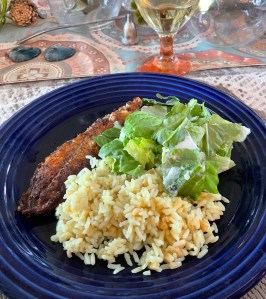
Ronnie had this at Half Shells Oyster House in Mobile recently and loved it. He later reminded me it was served with what was probably a “creole sauce” drizzled over it – a buttery-garlic, creole-seasoned sauce, which I’ll bet something like this might serve as a good re-creation of the sauce, if you’re interested in giving it a try…That said, this time, we thoroughly enjoyed this recipe without any addition of a sauce over it – just a fresh squirt of lemon and its seasoned butter that it was cooked in a cast iron skillet in! I also opted to leave the skin on the fish before cooking, and so glad I did…the skin (thin on our thin filets) just crisped right up and combined with the seasonings, was awesome – tasted just like a yummy, crispy, seasoned coating. Also, you get some beneficial nutrients in there, too – including higher levels of omega 3 fatty acids, vitamins D & E, collagen and a little additional protein as well.
Ingredients
A couple of filets (one for each person you’re serving, if they are thinner, maybe get another filet each) of Redfish – aka red drum – this is a mild, slightly sweet-tasting fish found in the Atlantic and Gulf and used in a lot of “blackened” (which refers to the type of seasoning used, not a char put on the dish) seafood dishes served often in Texas, Louisiana and Florida. Comparable substitutes can include snapper, mahi-mahi, catfish, tilapia, cod, or halibut. I found “Gulf Redfish” for this recipe in the fresh seafood section at my local HEB grocery store. As I mentioned above, the fish guy left the skin on. For anyone unfamiliar, skin-on is an easy, flavorful and nutrient-richer way to cook fish – the meat separates easily from the skin once cooked and you can choose to eat or discard the skin, whichever you prefer.
Butter and Canola oil (or your preference of oil to saute fish in – oils like avocado, grapeseed, canola, ghee or peanut oil have a higher smoke point and are ideal to use in a hot cast iron skillet without burning). I used Canola, and enough of it to cover the bottom of my cast iron skillet and an additional tbsp of butter for flavor. You want enough oil to keep your filets sizzling for the few minutes they need, with enough still sizzling to keep the browning going after you flip the fish over.
Lemon – half and de-seed a lemon for just a couple of filets, use more lemons if you’re cooking more fish.
Seasonings of your choice – I just used these three – Paul Prudhomme’s Blackened Redfish Magic seasoning, sea salt and coarse ground pepper.
Instructions
1. If serving additional side dishes with this meal (for this recipe, I served a boxed rice pilaf mix and a pre-bagged Caesar salad on the side) you might opt to prep those first, so you can concentrate your efforts on getting the fish just right.
2. Prep your fish – rinse your fish filets and pat dry completely with a paper towel. Set nearby on a plate and season it up to your liking (I used a little shake of sea salt and pepper and a generous sprinkling of the Redfish Magic blackened seafood seasoning), then you can get your skillet going…
2. I used a cast iron skillet, so I let it get nice and warm on medium-high heat for a few minutes before adding my oil and butter. Once you add the oil and butter to the hot skillet, let that start sizzling pretty good for another minute or so (you might see it start smoking, turn on your exhaust fan, if needed).
3. Add fish, skin side down first (if skin was left on) carefully to your skillet. I used tongs to gently lay them in there and a spatula to flip.
I also chose to cook mine skin-on, and was glad I did – the skin was thin so it just turned into a crispy seasoned crust and it was delicious – also fish skin has some beneficial nutrients you might not have gotten otherwise.
I covered my skillet, just partially, to cut down on the splatter factor. These filets were quite thin, so it didn’t take long – about 4 minutes – to get a good crispy sear on the first side. If you have a different type fish (halibut or mahi steaks) or thicker cut filets, you’ll want to allow a little more time for it to cook thru before you flip it. A good way to tell when ready to flip (if using a well-seasoned cast iron surface) is that you don’t have to struggle to keep it together when sticking a spatula under it to prepare to flip – a good sear should allow for an easier flip. Its an art-form that may take a few tries to get it right, so have patience!
4. When its got a good solid golden sear on the bottom, flip fish to the “meat” side down. With enough oils/butter left in the skillet, you should be able to get another golden sear on it. It might not take a full 4 minutes to cook on this side – especially if your filets are on the thinner side – since it already had a few minutes to cook thru. Again, let it go a bit longer if necessary for a thicker filet/type fish. I like to see the meat of our fish turn opaque, white, flakey/chunky when I see it’s done enough for us.
Then I removed them to a plate and hit ’em with a generous sprinkle of fresh lemon juice before serving. Hope you enjoy!
 Everyday at the 4J