


Everybody’s situation is different, but our horses and cows live out 24/7 in the pasture. Everybody can come in at-will to our fully open barn whenever they need shelter, heat/sun relief, fly relief, whatever, but of course they prefer being outside (behind a big cedar or oak, or in the woods if necessary), even in what we consider pretty miserable conditions. Along with that kind of freedom though, comes random pasture injuries from branches or fences or (all covered with vinyl covers, but we still have a horse that was rubbing his chin and neck on them once and managed to rub some pretty good raw spots) t-posts, wounds to each other in the way of herd-hierarchy hijinks, and bites or stings from the best Texas has to offer (which is much) in venomous insects, arachnids and reptiles. Because we have – and have had for the last few years – a nest-egg’s worth of horse injuries (another post to come on that) any unprotected injury on livestock is subject to fly exposure, which is bad because they can setup shop in it, lay their eggs and cause serious problems with infection and the wound being able to heal up.
Any measures you can provide your animals for fly management is a good first step, depending on your specific conditions – from simple manure management practices in the pasture and around the barn, biological and ecological pest management (including but not limited to “fly predator” programs for manure management, encouraging insect-eating species of birds, water diversion practices, grazing management, etc) to helpers to have around the barn, such as fans, misters, netting/plastic “curtains,” fly traps and other helpful tools. Then there are barrier options for your animals, like fly sheets and boots, insecticidal strategies (fly traps, sprays, premises sprays)…really, there are endless ways to tweak your “anti-fly” foundation.
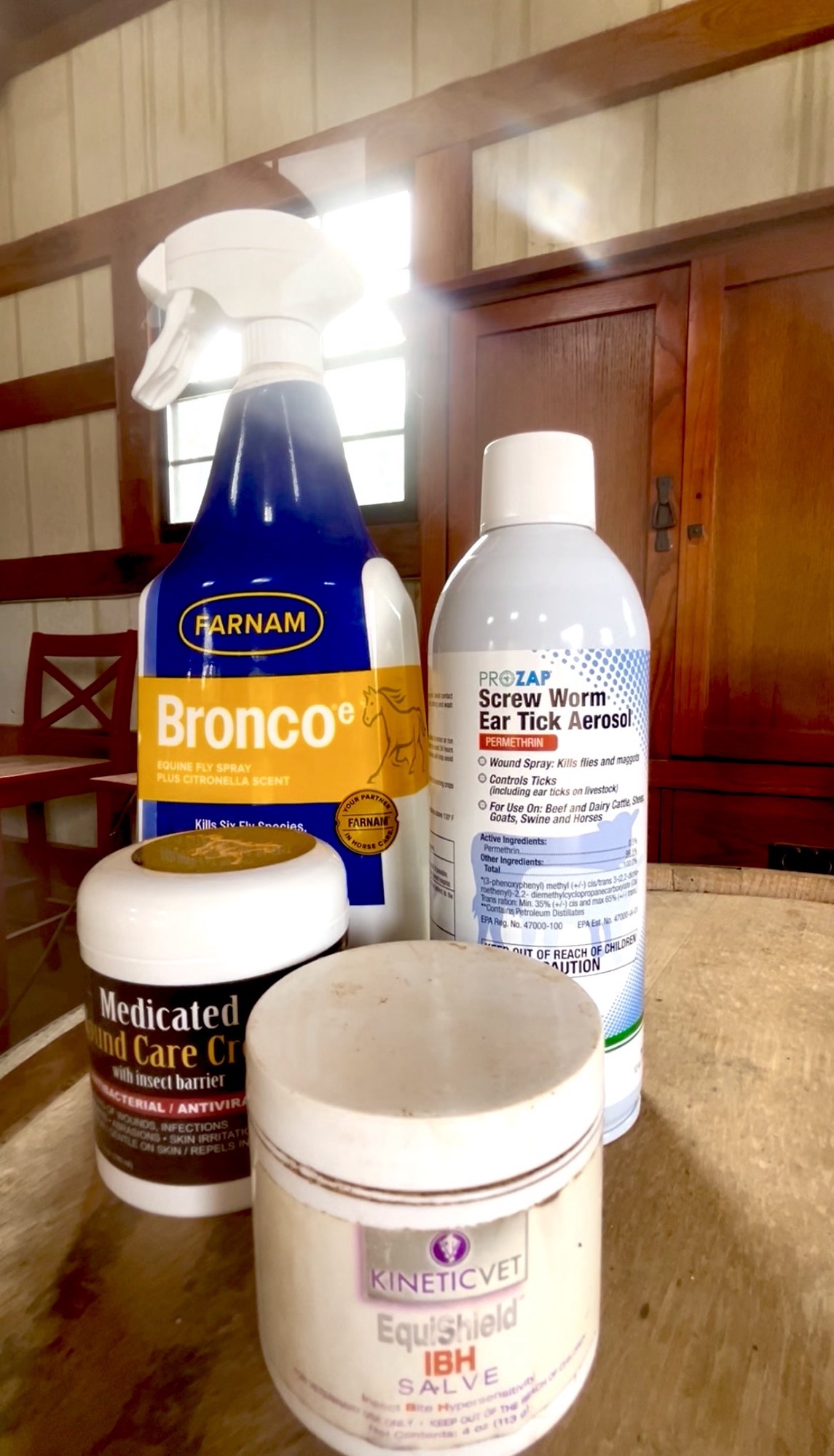
While you get some good environment-management practices in place, its also quite helpful to have some effective products on hand. For one of Ranger’s (many) injuries, our equine vet compounded us what we’ve seen so far as a “miracle” wound cream, containing ivermectin – an insecticide, dexamethasone – a potent steroid, an antibiotic I can’t remember, and triamcinolone, another corticosteroid that helps with inflammation. It has been a massive help to us in our barn! Sadly, we’re almost out of it, so we’ve been looking around for other anti-fly wound creams and salves to assist us in keeping flies (especially blowflies which are currently bringing the new world screwworm back into Texas) off healing wounds in our herd. These products are our picks at the moment:
(enlargeable photo of products below)
– Fly spray, of course – Everybody’s first line of defense. We have always used the high dollar stuff during the peak of fly season (Tritech 14 has been my fav), but we had limited options last time we were at the feed store and although I’m sure it is water based (doesn’t leave a residue on your hands when applying to horse necks and faces), its actually been working for us as well as any other that’s three times the price – and we have had a warm, humid, rainy spring so it is heavy fly season right now, here. It also smells much “lighter” to me than the others’ heavier scents – but it still appears to be as effective, so I’m giving it a thumbs up for our circumstances at the moment.
– Equishield’s IBH Salve – we purchased this a couple of years ago for one horse’s battle with summer itch (aka “sweet itch” or, basically insect bite hypersensitivity – a condition created from hypersensitivity to biting insects, specifically “midges” – a biting type of “no see um” that tends to appear in spring in wet, swampy areas especially). Equishield has a whole line of products to address insect bite hypersensitivity including shampoos, sprays and this salve – we tried them all for Parker’s summer itch and they worked very well and pretty instantly. This product doesn’t contain an insecticide to *kill* fly larva, so it won’t “cure” an infestation in a wound, but it can help guard against flies that aim to setup shop in a wound, presuming you notice the wound before a fly does…
– E3 Medicated Wound Care Cream – is a topical cream designed to help heal cuts, abrasions, scratches (and rain rot, another fun condition) by forming a breathable “seal.” It combines Zinc Oxide and Polyhexanide with natural insect-repelling oils to keep flies, gnats, and mosquitoes away. Again, this product doesn’t contain an insecticide to *kill* fly larva, so it won’t “cure” an infestation in a wound, but it can help guard against flies that might breach a wound, if you can catch it in time…
– Prozap Screw Worm and Ear Tick Removal Aerosol Spray – we googled this and it was one of the few products that returned results that indicated it is “explicitly approved and labeled to kill screwworm maggots in superficial wounds on livestock.” Don’t know how, as it seems to contain the same amount of permethrin that other fly sprays contain, and no ivermectin – perhaps because it can “coat” the wound, I’m not sure…we just grabbed some mainly for cattle scrapes, because you can spray it from a bit further out than having to smearing salve on them. As always, if any fly larva has seemed to infect a wound, contacting your vet is always the best answer, and extra important now.
Just like security of any kind – home security, personal security, cyber security, every kind of security – the idea tends to work best when applied in “layers” – I see products like these as our “first layer” against the fly fight. And, as always, if something’s not healing right, of course, best to consult your vet sooner rather than later.

Leave a Reply